
By Ellyn Vohnoutka, MSHC, BSN, RN and Cara Murez HealthDay Reporters
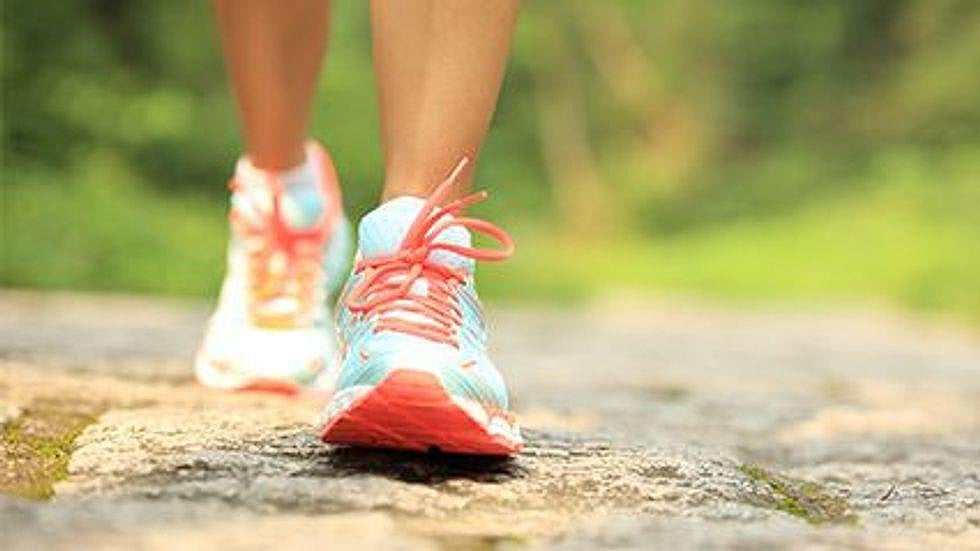
THURSDAY, Oct. 15, 2026 (HealthDay News) — Starting a walking routine takes very little: comfortable, supportive shoes and your own two feet.
Unlike gym workouts, walking costs little up front and fits almost any schedule.
“Walking’s a great way to work out because we can integrate it into our daily lives,” said Amanda Paluch, an associate professor in the department of kinesiology at the Institute for Applied Life Sciences at the University of Massachusetts Amherst.
“And if you can just fit it around your house or within your neighborhood, it’s one of the most convenient options,” Paluch said.
Is Walking Enough To Improve Health?
Yes, say researchers, and the payoff can be substantial.
Walking briskly for at least 30 minutes a day, five days a week, meets the federal goal of 150 minutes of moderate activity a week, according to the U.S. Department of Health and Human Services.
People who walk more, and walk faster, tend to have lower risks of heart disease, stroke, high blood pressure, type 2 diabetes and dementia, according to a 2023 research review published in GeroScience.
One analysis cited in the review found the fastest walkers had a 44% lower risk of stroke than the slowest walkers.
The review also pointed to a 2022 analysis of 15 studies, led by Paluch, that found the risk of early death kept dropping as daily steps rose. Benefits leveled off at about 6,000 to 8,000 steps a day for adults 60 and older and 8,000 to 10,000 steps for younger adults.
The review noted that people who started with the fewest steps saw the biggest gains.
“Taking just a few more steps per day, that’s a great way to get started. A walking program is really nice because it fits a very broad population,” Paluch said.
How To Start A Walking Program
Paluch advised starting where you are physically, then building up gradually.
Wear a step counter or use a phone app for a few days to find your baseline, she suggested. If it’s about 4,000 steps, which is common, add about 500 steps a day for the next week.
“Just think about trying to make each increase a habit, right? So, we don’t want to just jump into it and say, we’re going to go out and walk five miles,” Paluch said. “Our goals become more achievable when we think about those in bite-size pieces and, also, we prevent injury.”
Breaking a longer workout into shorter “bouts” of activity can also help beginners, Paluch said. Three 10-minute walks spread across the day count toward the weekly goal, according to Kaiser Permanente.
Pace matters, too. A moderate-intensity walk means you can walk but can’t sing, Paluch said.
Kaiser Permanente describes a brisk walk similarly: Breathing and heart rate pick up, but conversation is still comfortable. A brisk 30-minute walk adds up to about 3,000 steps.
Walking at a moderate-to-vigorous intensity is more helpful for people who want walking to be part of a weight-loss plan, Paluch added. A 150-pound person who walks briskly burns about 297 calories an hour, according to the American Cancer Society.
To stay safe and comfortable, Mayo Clinic advises warming up with a few minutes of slow walking, cooling down at the end and sticking to safe, well-lit routes. People with a long-term health condition or a recent injury should check with their healthcare provider before starting a walking program.
Tips For Maintaining Your New Routine
Paluch offered some tips for not losing ground with a walking workout:
Keep walking shoes close by. “The idea is to try to eliminate the barriers as much as possible,” Paluch said.
On a busy day, walk a few flights of stairs instead of a more typical workout. It all counts.
Don’t feel defeated after a missed day. “When we can’t get it all, get at least some and that will continue to help with habit formation,” Paluch said.
Walking with a friend or switching up the route can also help people stick with it.
More information
The U.S. Centers for Disease Control and Prevention has more on physical activity for adults.
SOURCES: Amanda Paluch, PhD, assistant professor, department of kinesiology at the Institute for Applied Life Sciences, University of Massachusetts Amherst; GeroScience, July 26, 2023; Mayo Clinic, May 26, 2026; Kaiser Permanente, Dec. 31, 2025
Back

The news stories provided in Health News and our Health-E News Newsletter are a service of the nationally syndicated HealthDay® news and information company. Stories refer to national trends and breaking health news, and are not necessarily indicative of or always supported by our facility and providers. This information is provided for informational and educational purposes only, and is not intended to be a substitute for medical advice, diagnosis, or treatment.



