
By Dennis Thompson HealthDay Reporter
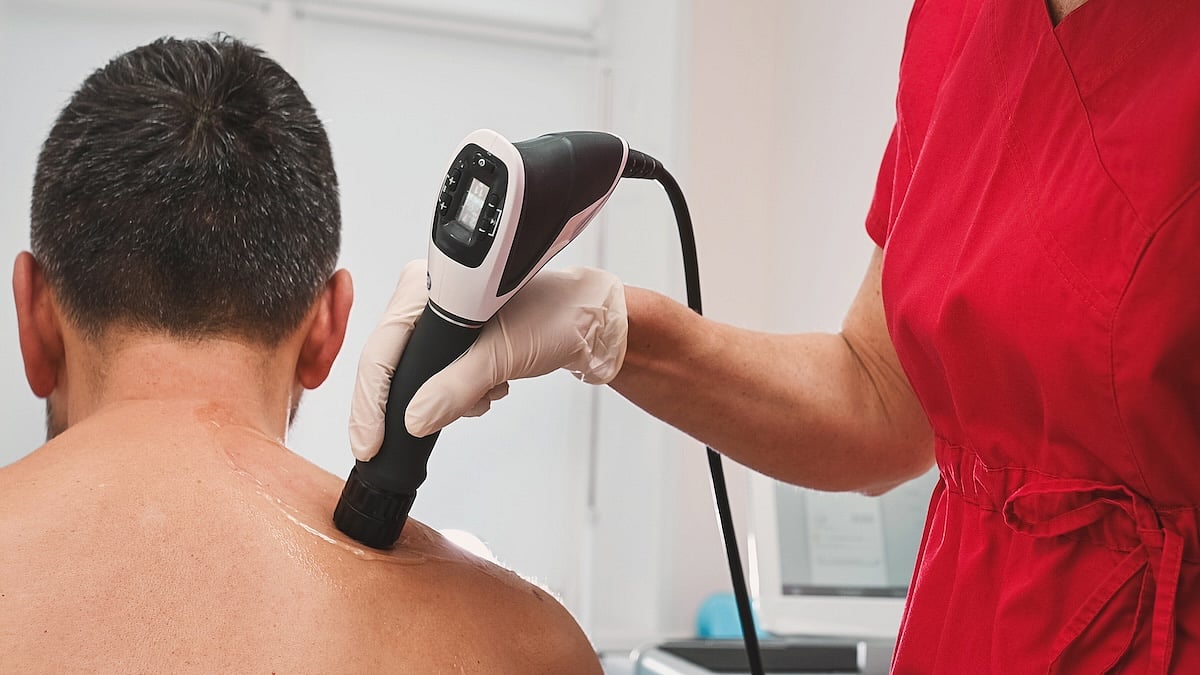
MONDAY, Nov. 16, 2026 (HealthDay News) — Powerful sound wave therapy appears to be one of the best treatments for a frozen shoulder, a new evidence review has concluded.
Shockwave therapy likely can reduce short-term pain linked to a frozen shoulder, in which the strong connective tissue surrounding the joint becomes thick, stiff and inflamed, researchers reported in The BMJ.
Manipulation under anesthesia — doctors moving and stretching the shoulder while the patient is unconscious — also probably restores mobility to the joint, researchers noted.
Most other treatments, including steroid shots, platelet-rich plasma injections, acupuncture and laser or heat therapy, had little to no data on their effectiveness, researchers said.
“Moderate certainty evidence suggests that extracorporeal shockwave therapy probably reduces short-term pain, while manipulation under anesthesia, with or without intra-articular steroid injections, probably improves short-term flexion compared with usual care,” concluded the research team led by Jiahao Meng, a doctoral student in orthopedics at Xiangya Hospital in Hunan, China.
“For most other interventions and mid-term outcomes, the evidence was of low or very low certainty,” the team added.
As many as 5% of people suffer from frozen shoulder, which can cause pain, sleep disturbance, restricted movement and limitations in daily activities, researchers said in background notes. The condition is most common in middle-aged people aged 40 to 60, and women tend to suffer from it more than men.
For the review, researchers analyzed results from 189 prior clinical trials involving nearly 13,000 people, with an average age of 54.
The strongest evidence supported shockwave therapy, which involves low-energy sound waves that stimulate blood flow and healing in damaged tissue, researchers found.
Clinical trials showed that shockwave therapy likely reduced short-term pain compared with usual care, results showed.
Meanwhile, manipulation under anesthesia improved patients’ ability to raise their arm forward and overhead, the data revealed.
“For most other interventions, the evidence remains too uncertain to support a definitive treatment hierarchy,” researchers wrote.
The team also noted that no long-term trials have tested shockwave therapy and manipulation under anesthesia, so these findings should only be used to guide treatment within the first six months after diagnosis.
In the meantime, more research is needed to better test all treatment options over longer periods of time, researchers said.
“Adequately powered head-to-head trials with follow-up beyond 12 months, and preferably 18-24 months where feasible, are needed to determine whether early improvements are sustained and whether interventions alter the longer-term recovery trajectory,” researchers wrote.
More information
Ohio State University has more on shockwave therapy.
SOURCES: The BMJ, news release, Nov. 4, 2026; The BMJ, Nov. 4, 2026
Back

The news stories provided in Health News and our Health-E News Newsletter are a service of the nationally syndicated HealthDay® news and information company. Stories refer to national trends and breaking health news, and are not necessarily indicative of or always supported by our facility and providers. This information is provided for informational and educational purposes only, and is not intended to be a substitute for medical advice, diagnosis, or treatment.



