
By Dennis Thompson HealthDay Reporter
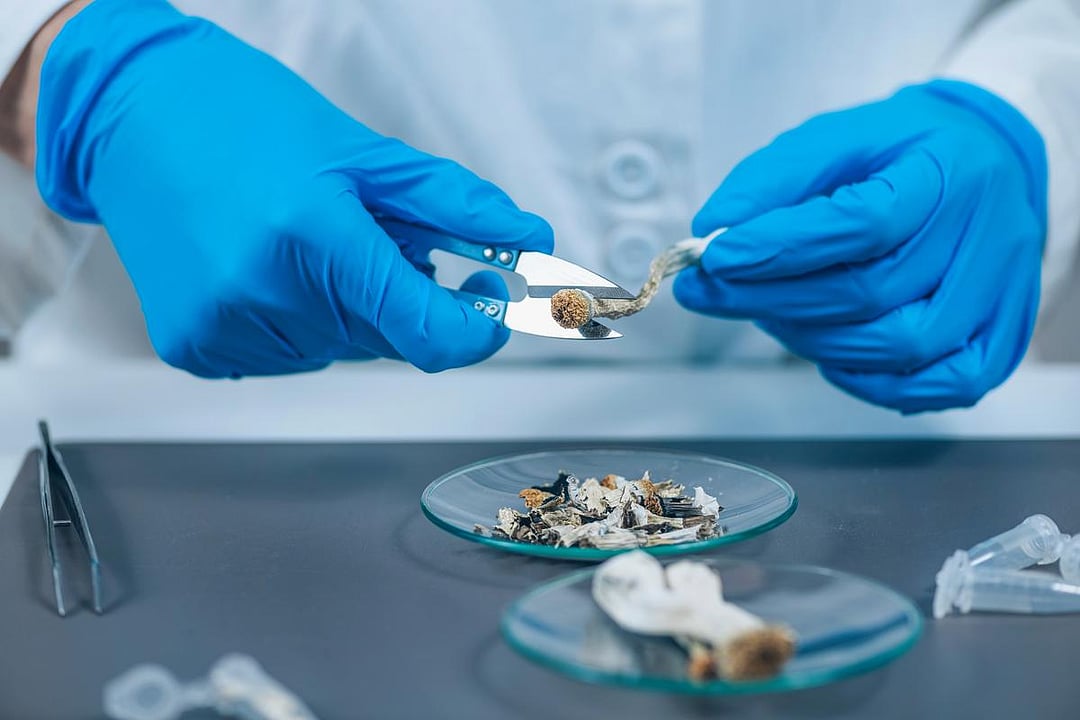
TUESDAY, Oct. 13, 2026 (HealthDay News) — The United States’ first licensed psilocybin centers are hewing close to safety guidelines required by law, a “secret shopper” program has found.
Oregon’s psilocybin centers — the first such regulated programs in the U.S. — are largely following guidelines related to patient screening and treatment, rather than handing out psychedelics willy-nilly, researchers reported recently in the journal Health Affairs Scholar.
“These interactions were not just, ‘Hey, give me mushrooms,’ and that’s it,” co-senior author Leopoldo Cabassa said in a news release.
“These were thoughtful conversations where the facilitator engaged people, asked good questions, and tried to get as much information as possible,” Cabassa said. “Facilitators pushed past a simple checklist to actually understand a caller’s history before making a recommendation for services.” Cabassa is co-director of Washington University in St. Louis’ Center for Mental Health Services Research.
But at prices close to $2,000 per session, it’s not clear how many people will be able to afford a psychedelic trip that might improve their mental health, researchers said.
“Oregon has dosed more people with psilocybin in a regulated model than anywhere else in the world,” lead researcher Dani Adams, an assistant professor of social work at the University of Missouri, said in a news release. “But it is still out of reach for most Americans who are struggling with their mental health.”
In 2023, Oregon became the first state to legalize regulated, supervised use of psilocybin, the trip-inducing chemical in “magic” mushrooms.
For the new study, researchers posing as prospective clients suffering from depression reached out to 15 of the state’s 22 active psilocybin centers by phone, checking to see whether the centers followed safety guidelines set by state law.
The law requires that people be treated with psilocybin under the guidance of a trained facilitator, and that centers refuse service to people who are taking lithium, have suicidal thoughts, or have been diagnosed with psychosis.
People do not need a diagnosis or referral to receive psilocybin treatment, but the centers are not allowed to hand out psilocybin for home use, researchers noted.
“Going in, we wondered whether Oregon’s model might work like a dispensary in practice — that you could call a center, pick up psilocybin and take it home with little screening along the way,” co-senior author Dr. Kevin Xu, an assistant professor of psychiatry at Washington University in St. Louis, Missouri, said in a news release.
Results showed that the centers asked about the medications a person was taking, suicidal thoughts and actions, and their psychiatric history.
Nearly every center flagged psychoactive drugs like lithium that should not be combined with psilocybin, researchers found. None allowed unsupervised use, and no centers advised callers to stop taking antidepressants without first consulting with their doctor.
But treatment cost a median of $1,900 per session, and none of the centers accepted insurance, researchers noted.
“Far from a dispensary model, I was surprised by how service centers asked detailed questions about callers’ mental health and risk factors,” Xu said. “Services were also very expensive.”
More information
Johns Hopkins Medicine has more on psilocybin treatment for depression.
SOURCES: Washington University in St. Louis, news release, Oct. 12, 2026; Health Affairs Scholar, Oct. 12, 2026
Back

The news stories provided in Health News and our Health-E News Newsletter are a service of the nationally syndicated HealthDay® news and information company. Stories refer to national trends and breaking health news, and are not necessarily indicative of or always supported by our facility and providers. This information is provided for informational and educational purposes only, and is not intended to be a substitute for medical advice, diagnosis, or treatment.



