
By Dennis Thompson HealthDay Reporter
THURSDAY, Nov. 12, 2026 (HealthDay News) — A newer immune-dampening drug appears to effectively quell pain and swelling in joints affected by psoriatic arthritis, a new study says.
The injectable drug bimekizumab (Bimlex) eased psoriatic arthritis for more patients than a slightly older drug from its same class, risankizumab (Skyrizi), researchers reported Tuesday at the American College of Rheumatology (ACR) conference in Orlando, Florida.
After half a year, about 55% of patients on bimekizumab had achieved a significant reduction in their psoriatic arthritis, compared to 44% taking risankizumab, researchers said.
“Head-to-head trials designed to mirror clinical practice are the gold standard for comparative clinical research,” Dr. Donatello Crocetta, chief medical officer for the pharmaceutical company UCB, said in a news release.
The results from this clinical trial “help redefine treatment expectations for people living with psoriatic arthritis, reinforcing our belief that patients and clinicians can aim higher when setting treatment goals,” Crocetta said.
Both drugs are interleukin inhibitors, which work by blocking chemical messengers called interleukins that promote inflammation in the body.
Bimekizumab targets two different interleukins and received FDA approval in 2023, while risankizumab targets only one and was approved in 2019, according to Drugs.com.
For the new clinical trial, researchers randomly assigned 553 adults with active psoriatic arthritis to receive either bimekizumab or risankizumab. Both drugs are delivered through injections.
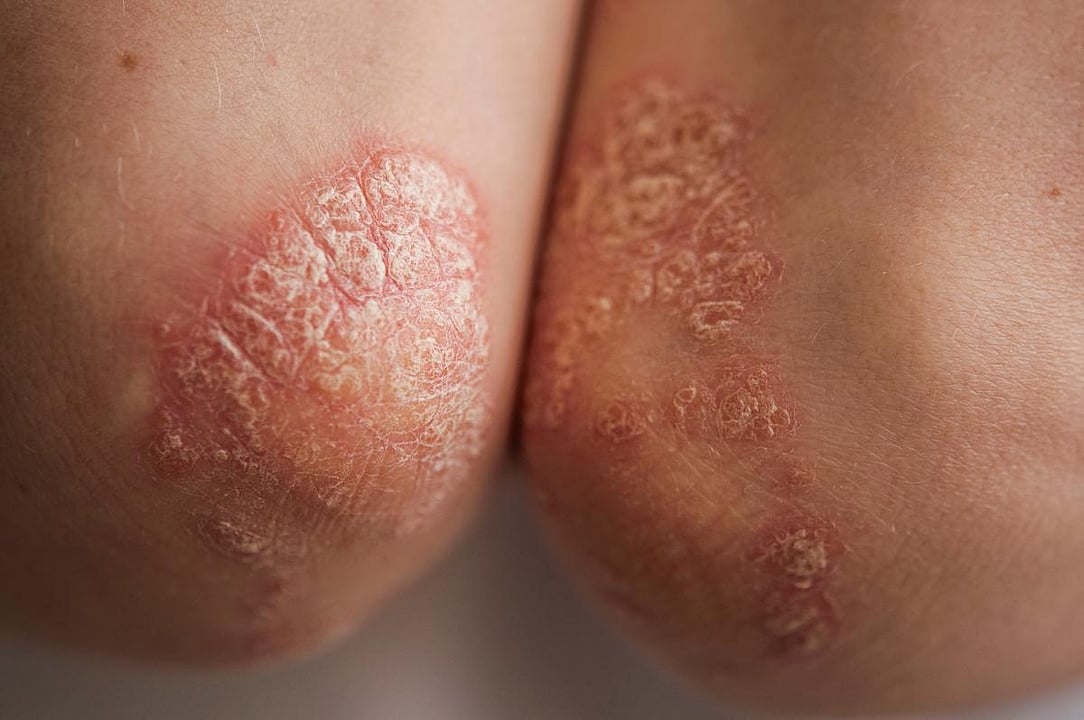
Psoriatic arthritis is a type of arthritis that affects people who suffer from the autoimmune disease psoriasis. The inflammation caused by psoriasis causes pain, tenderness and swelling in a person’s joints, primarily in their fingers, toes, knees and elbows.
Researchers judged the drugs on their ability to cause at least a 50% or greater improvement in a person’s psoriatic arthritis, a goal called ACR50 after the American College of Rheumatology.
After four months on the drugs, about 50% of bimekizumab patients had reached ACR50 compared with 38% of those taking risankizumab, researchers said.
Those numbers grew to 55% and 44% respectively by six months.
“ACR50 is the new standard in psoriatic arthritis, reflecting considerable joint improvements and is known to be associated with clinically meaningful reductions in disease activity and subsequent improvements in quality of life,” researcher Dr. Joseph Merola said in a news release. He’s president of the Rheumatologic Dermatology Society and chair of the dermatology department at UT Southwestern Medical Center in Dallas.
In the head-to-head trial, “bimekizumab demonstrated rapid and greater ACR50 responses that were sustained to six months, in addition to delivering high rates of complete skin clearance, both of which are especially important for those living with psoriatic arthritis,” Merola said.
Fewer than 2% of patients taking bimekizumab reported serious side effects from taking the drug, compared to about 3% of those taking risankizumab.
Infections of candida fungus occurred more frequently in bimekizumab patients (3%) than risankizumab patients (1%) as a result of the drugs’ immune blocking action.
UCB, maker of Bimzelx, funded the clinical trial.
Findings presented at medical meetings should be considered preliminary until published in a peer-reviewed journal.
More information
The Cleveland Clinic has more on psoriatic arthritis.
SOURCE: UCB, news release, Nov. 9, 2026
Back

The news stories provided in Health News and our Health-E News Newsletter are a service of the nationally syndicated HealthDay® news and information company. Stories refer to national trends and breaking health news, and are not necessarily indicative of or always supported by our facility and providers. This information is provided for informational and educational purposes only, and is not intended to be a substitute for medical advice, diagnosis, or treatment.



