
By Dennis Thompson HealthDay Reporter
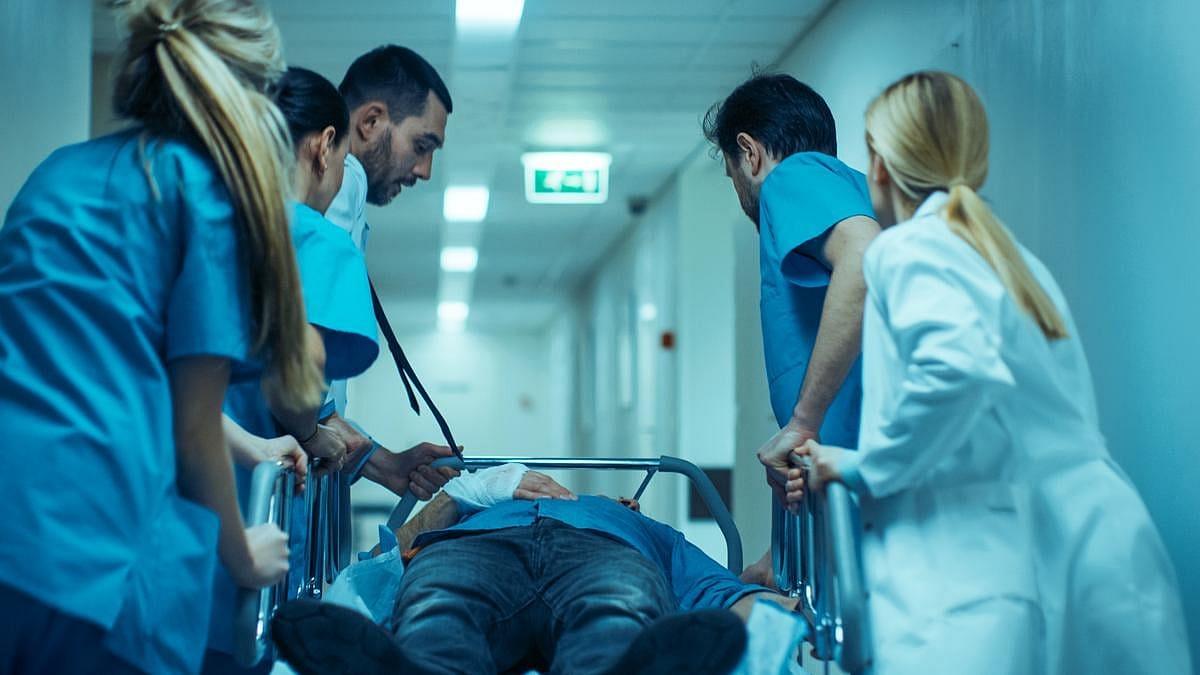
TUESDAY, Nov. 10, 2026 (HealthDay News) — PTSD is common among people who go to an ER to have broken bones set and wounds sutured after an accident.
But it’s tough for time-pressed doctors to judge which patients need counseling after their physical injuries have been treated.
AI chatbots trained to analyze patients’ tales of their accidents could be an effective means of red-flagging post-traumatic stress disorder (PTSD) cases and getting people the help they need, researchers wrote Nov. 9 in the journal Nature Communications.
A new AI system called PREVIA outperformed a human ER doctor who specializes in PTSD in identifying at-risk patients, researchers found.
PREVIA identified 100% of future PTSD cases out of a group of 145 ER patients, while the human doc identified only 89%, results showed.
“This is the first study to show that a patient’s spontaneous answers to a single, routine care question — ‘What brought you to the ED?’ — carries enough of a psychological signal to forecast their PTSD risk a month later,” said senior researcher Katharina Schultebraucks.
“PREVIA can serve as an AI screener that identifies at-risk patients and explains why, without adding any time to intake in busy emergency rooms,” Schultebraucks said in a news release. She is an associate professor of psychiatry and population health at NYU Langone Health in New York City.
More than a quarter of the 43 million people admitted to an ER with physical injuries wind up developing PTSD within a month of their traumatic event, researchers said in background notes.
That makes the ER the place to identify these cases, but it’s rare that a person is still in touch with the hospital a month later, researchers said.
Brief questionnaires have been developed that can forecast future PTSD, but only about a quarter (28%) of ERs routinely screen for the disorder, researchers said. What’s more, only two-thirds of those ERs use one of the proven questionnaires.
For the new study, researchers developed a system of AI chatbots that could analyze a person’s description of what happened to them and find patterns indicating their risk of PTSD.
“The emergency department is often the only point of contact a trauma survivor has with the healthcare system before symptoms become much harder to treat,” Schultebraucks said. “By identifying at-risk patients at that first encounter, PREVIA could open a window for timely care approaches, when preventive intervention is most effective.”
In their paper, researchers provided an example of a patient story the PREVIA system might evaluate.
“So I was on my way to work when I had an accident on my bike,” said a fictional 29-year-old woman who’d been hit by a car. “It happened fast, and I went straight into it. After that, everything’s kind of a blur. I remember there being a lot of blood.”
The example continued: “Now I’m here, and I’ve just learned that the injury is worse than I first thought. So that’s…not ideal. If I had to choose, I’d probably rather have almost any other injury than this one. But here we are.”
The system’s layered approach scans a patient’s story for symptoms like loss of control, amnesia or feeling disconnected from their body. It then weighs risk factors from the patient’s personal or medical history, before summarizing its findings for a doctor to review.
In this example, PREVIA said the woman was at risk for PTSD, given how she was describing her accident.
To test the model, researchers had it analyze the stories of 145 real-life patients treated in New York City emergency departments between March 2023 and July 2025.
The patients were video-recorded on an iPad while they responded to a single request: “Tell me about the event that brought you to the ED.” Patients were given three minutes to relate their tale.
PREVIA correctly identified more than 95% of the patients at risk for PTSD, as well as every single patient who was later diagnosed with PTSD. Out of that group of 30 diagnosed patients, a human doctor correctly flagged 89%.
The system is designed to explain its reasoning, grounding its predictions in established PTSD risk factors, researchers said.
“We built PREVIA on open-source models with no training or fine-tuning required," Schultebraucks said. "That means other hospitals can test it independently, without access to proprietary software or our patient data, which is essential for widespread adoption.”
The open-source coding framework for PREVIA is provided on GitHub.
More information
The American Psychiatric Association has more on PTSD.
SOURCES: NYU Langone Health, news release, Nov. 9, 2026; Nature Communications, Nov. 9, 2026
Back

The news stories provided in Health News and our Health-E News Newsletter are a service of the nationally syndicated HealthDay® news and information company. Stories refer to national trends and breaking health news, and are not necessarily indicative of or always supported by our facility and providers. This information is provided for informational and educational purposes only, and is not intended to be a substitute for medical advice, diagnosis, or treatment.



