
By Dennis Thompson HealthDay Reporter
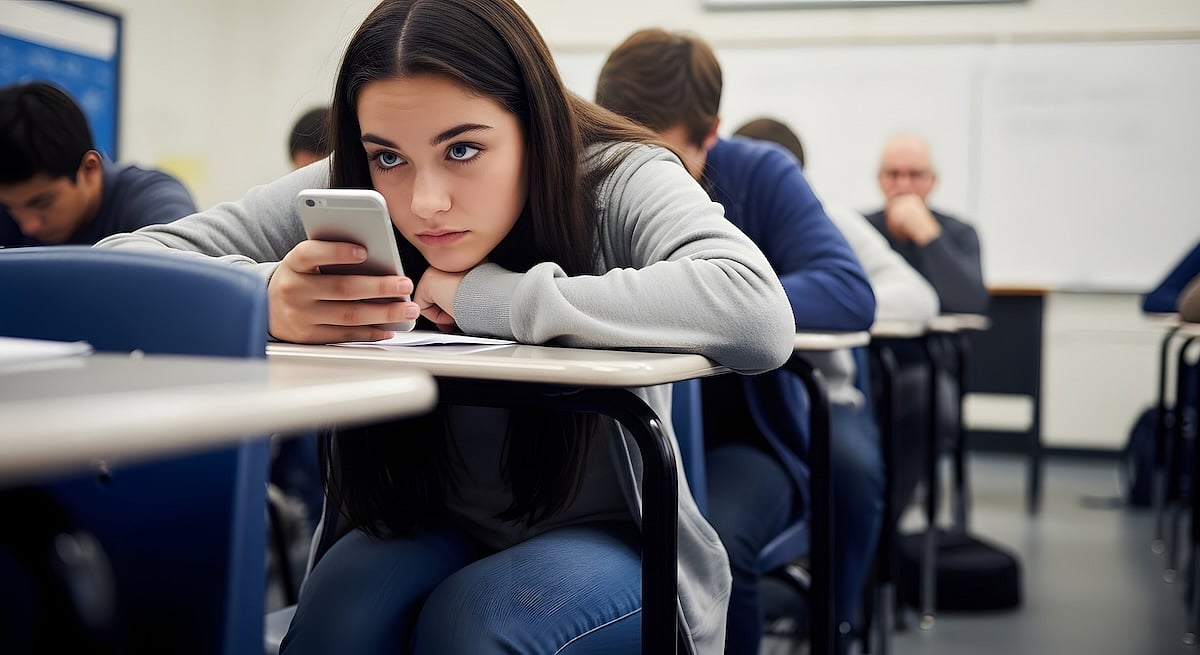
TUESDAY, March 10, 2026 (HealthDay News) — Middle and high school students spend nearly a third of the school day on their smartphones, undermining their education, a new study says.
The students checked their phones dozens of times, often looking at social media or entertainment, researchers reported March 9 in JAMA Network Open.
Researchers also found that frequent phone checking was linked to weaker attention and impulse control.
“Smartphones are no longer something students use occasionally during school — they’re present during every hour of the day,” said lead researcher Eva Telzer, a professor of psychology and neuroscience at the University of North Carolina-Chapel Hill.
“Our findings show that frequent phone checking may undermine the very skills students need to succeed in the classroom,” she added in a news release.
For the new study, researchers tracked the iPhone use of 79 tweens and teens living in the Southeastern U.S. The students’ screen time report captured their smartphone use at every hour of the day.
Results showed that the students spent more than two hours of the school day on their smartphones.
Overall, the students checked their smartphones an average 64 times during school hours, researchers found.
“What surprised us most was the sheer amount of time teens are on their phones during school,” senior researcher Kaitlyn Burnell, a research assistant professor at UNC-Chapel Hill, said in a news release. “Students were on their phones every hour during school, spending one-third of the school day on their phones, with social media and entertainment accounting for over 70% of their time.”
Those who checked their phones more frequently had poorer cognitive control, a key skill for learning and academic success, researchers said. The skill reflects a person’s ability to direct their thoughts, emotions and behaviors in a goal-directed manner.
By capturing phone use moment to moment, researchers could identify frequent checking as well as total screen time. These interruptions could be disruptive to learning, fragmenting students’ attention and reflecting weaker self-control.
“As states and school districts across the country adopt new phone policies, our findings provide support for limiting access to smart phones during school hours” Telzer said. “Policies that restrict access to highly reinforcing platforms, including social media and entertainment apps, during instructional time may help protect students’ attention and academic engagement.”
More information
The Institute of Education Sciences has more on cell phones at public school.
SOURCE: University of North Carolina-Chapel Hill, news release, March 9, 2026
Back

The news stories provided in Health News and our Health-E News Newsletter are a service of the nationally syndicated HealthDay® news and information company. Stories refer to national trends and breaking health news, and are not necessarily indicative of or always supported by our facility and providers. This information is provided for informational and educational purposes only, and is not intended to be a substitute for medical advice, diagnosis, or treatment.



