
By Dennis Thompson HealthDay Reporter
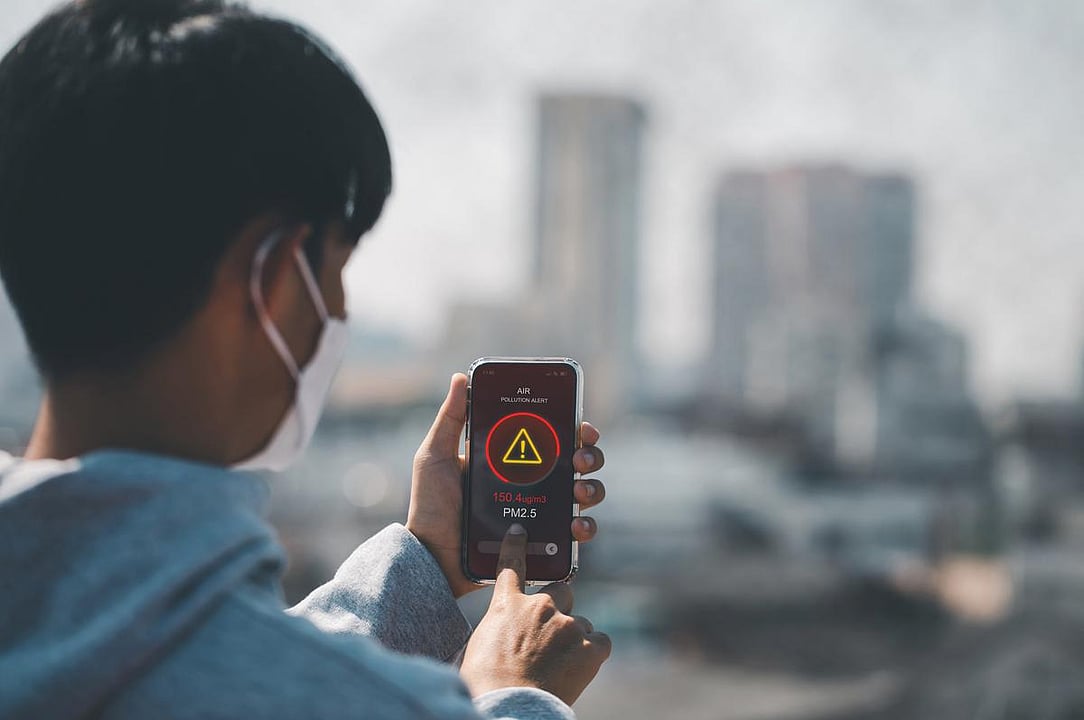
MONDAY, May 18, 2026 (HealthDay News) — Long-term exposure to smog might increase the risk of Lewy body dementia, the brain disease that CNN founder Ted Turner battled for several years before his recent death, a new study says.
Even small increases in particle pollution and nitrogen dioxide are linked to increased risk of Lewy body dementia (LBD) and Parkinson’s disease-related dementia, researchers reported May 14 in JAMA Network Open.
People’s risk of LBD nearly quadrupled for every incremental increase in exposure to particle pollution, researchers found.
Similarly, risk for Parkinson’s-related dementia more than doubled for every such increase in particle pollution exposure, the study found.
“While this research does not establish causation, it does show a clear association between air pollution exposure and increased risk of these dementias,” said researcher Dr. Gregory Pontone, chief of the Aging, Behavioral and Cognitive Neurology Division at the University of Florida in Gainesville.
“It’s an important step in understanding how environmental factors may contribute to disease development,” Pontone said in a news release.
Turner died last week after battling LBD since 2018. He was 87 years old.
Lewy body dementia is associated with abnormal brain deposits of a protein called alpha-synuclein, according to the National Institutes of Health. Those deposits, called Lewy bodies, affect chemicals in the brain and contribute to problems with thinking, movement, behavior and mood.
Alpha-synuclein also is associated with Parkinson’s disease, researchers noted.
For the new study, researchers analyzed health records for more than 2.1 million people ages 65 to 95 living in Denmark, of whom about 3,000 had LBD and 3,800, Parkinson’s-related dementia. The records ran from 2001 through 2021.
Using the people’s home addresses, researchers tracked their exposure to air pollution for more than a decade.
Results showed an increased risk from exposure to either particle pollution or nitrogen dioxide.
The risk associated with nitrogen dioxide was smaller than that from particle pollution, but higher exposure still was linked to a nearly doubled risk for Lewy body dementia, researchers said.
“These are pollutants most people are exposed to every day,” lead researcher Dr. Dimitry Davydow said in a news release. Davydow is a professor with the Norman Fixel Institute for Neurological Diseases at the University of Florida.
"They come from things like traffic, shipping and other forms of combustion,” he added.
These air pollutants are small enough to enter the brain via a person’s bloodstream after being inhaled, researchers said.
"I think this adds to the growing body of literature about the health effects of air pollution on the body, not just the heart and the lungs, but also now on the brain,” said Dr. Jacqueline Moline, senior vice president and chair of occupational medicine, epidemiology and prevention at Northwell Health in Manhasset, New York.
"There's some thought that air pollution may be related to inflammation and inflammation in the brain,” added Moline, who reviewed the findings. “We know that air pollution components can cause inflammation. That's how they affect other body organs. So, it looks like they're also doing the same thing in the brain."
More information
The National Institutes of Health has more on Lewy body dementia.
SOURCES: University of Florida, news release, May 14, 2026; Dr. Jacqueline Moline, senior vice president and chair of occupational medicine, epidemiology and prevention, Northwell Health, Manhasset, New York
Back

The news stories provided in Health News and our Health-E News Newsletter are a service of the nationally syndicated HealthDay® news and information company. Stories refer to national trends and breaking health news, and are not necessarily indicative of or always supported by our facility and providers. This information is provided for informational and educational purposes only, and is not intended to be a substitute for medical advice, diagnosis, or treatment.



